
The modern enterprise is facing a productivity paradox. Employees are working longer hours, yet performance, creativity, and decision quality are declining. This shift has led leaders to rethink how work is structured. The concept of the 5-hour workday is gaining attention—not as a productivity shortcut, but as a strategic model where focused effort and intentional rest drive sustainable high performance.
In an economy defined by knowledge work, cognitive capacity has replaced physical endurance as the primary performance constraint. Strategic rest is emerging as a competitive advantage rather than a personal wellness trend.
The Decline of the Traditional Long-Hour Model
For decades, long working hours were associated with dedication and output. However, research and enterprise data now show that extended workdays reduce concentration, increase error rates, and accelerate burnout.
In high-stakes environments, fatigue leads to poor judgment and slower response times. This reality is forcing enterprises to question whether more hours truly produce better outcomes—or simply more exhaustion.
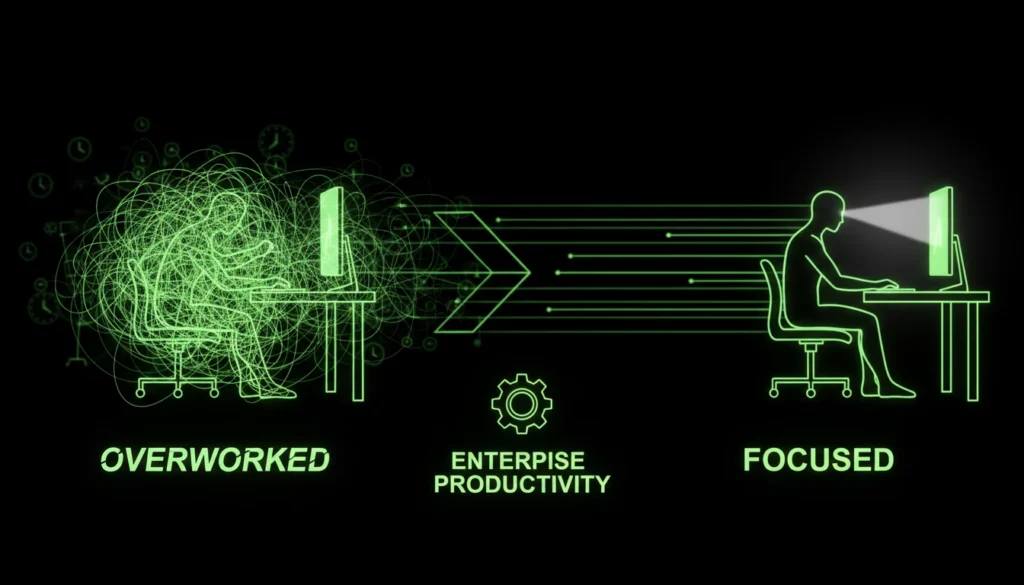
Why Strategic Rest Improves Cognitive Performance
Strategic rest is not inactivity. It is the intentional recovery that allows the brain to reset, process information, and restore focus. Shorter workdays centered on deep, uninterrupted work enable employees to operate at peak cognitive capacity.
The 5-hour workday prioritizes quality over quantity. By reducing distractions and fatigue, enterprises unlock sharper thinking, faster problem-solving, and more consistent performance across teams.
The 5-Hour Workday and Deep Work Culture
High-performing organizations are shifting toward deep work cultures—environments where employees focus intensely on high-impact tasks for limited periods. Meetings are reduced, communication is streamlined, and work is outcome-driven.
Within this model, a 5-hour workday becomes sufficient to deliver meaningful results. Employees spend less time context-switching and more time creating value.

Leadership, Trust, and Output-Based Measurement
Adopting a shorter workday requires a leadership mindset shift. Performance must be measured by outcomes, not visibility. This demands trust, clarity of goals, and accountability at every level.
Enterprises that successfully implement strategic rest invest in clear priorities, well-defined KPIs, and autonomous teams. The result is higher engagement and stronger ownership of results.
Strategic Rest as a Competitive Advantage
Talent retention is becoming a critical challenge for enterprises. Professionals increasingly value autonomy, mental well-being, and meaningful work over rigid schedules.
Organizations that normalize strategic rest signal long-term thinking. They attract high-caliber talent, reduce burnout-related attrition, and maintain consistent performance even under pressure.
Technology’s Role in Enabling Shorter Workdays
Automation, AI-driven tools, and modern collaboration platforms are reducing the time required to complete routine tasks. When leveraged effectively, technology allows teams to focus on high-value work within shorter timeframes.
The 5-hour workday is not about doing less—it is about using technology and focus to do what matters most.
Strategic Rest and Long-Term Business Sustainability
Sustainable performance is increasingly tied to how organizations manage human energy over time. Enterprises that normalize strategic rest reduce burnout, improve decision quality, and maintain consistent output during periods of rapid change. This approach supports long-term business sustainability by protecting both talent and institutional knowledge.
Conclusion: Redefining Performance for the Future of Work
The 5-hour workday challenges outdated assumptions about productivity. Strategic rest is proving to be a catalyst for better thinking, stronger execution, and long-term enterprise performance.
As work becomes increasingly cognitive and complex, enterprises that redesign work around human limits will outperform those that cling to outdated models. Learn how DB Soft Tech helps organizations build future-ready operating models on our About Us page.
Ready to rethink productivity and performance in your organization? Contact DB Soft Tech to design smarter, sustainable work strategies for modern enterprises.