Prompt engineering has been one of the most talked-about skills of the AI era. Enterprises invested heavily in learning how to structure prompts, refine inputs, and guide large language models to produce accurate outputs. However, this approach is approaching its natural limit. In 2026, the focus will shift away from crafting instructions and toward understanding intent. This transition marks the end of prompt engineering as a core enterprise capability.
Intent-based AI marks a fundamental shift in how enterprises interact with artificial intelligence, moving beyond manual prompt engineering toward outcome-driven, autonomous intelligence.
Why Prompt Engineering Is Reaching Its Limits
Prompt engineering emerged as a workaround for early AI limitations. Models required precise wording to avoid ambiguity and errors. While effective in controlled environments, this approach does not scale well across large organizations.
Enterprises struggle with inconsistency when different teams write prompts differently. Knowledge becomes fragmented, outcomes vary, and operational reliability suffers. Prompt engineering also creates a dependency on specialized skills, slowing adoption and increasing operational risk.
As AI becomes embedded into mission-critical systems, enterprises can no longer rely on manual prompt crafting. Reliability, predictability, and governance demand a higher-level abstraction.
What Intent-Based AI Actually Means
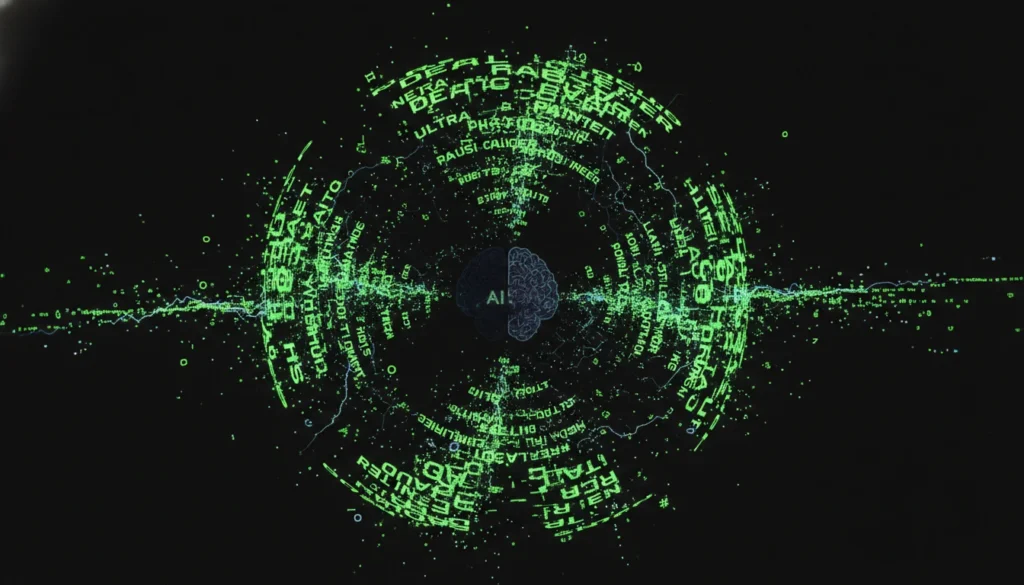
Intent-based AI shifts the interaction model from instructions to outcomes. Instead of asking an AI system to perform a task using specific wording, enterprises express what they want to achieve and the constraints that matter.
For example, rather than prompting an AI to generate a report in a particular format, an intent-based system understands the business objective, audience, compliance requirements, and performance criteria. The AI then determines how to deliver the result.
This approach mirrors how executives communicate with teams. Leaders define goals and expectations, not step-by-step instructions. Intent-based AI brings the same paradigm to intelligent systems.
Why 2026 Is the Turning Point
Several forces are converging to make 2026 the year of intent-based AI. Advances in reasoning models, memory systems, and multi-modal understanding allow AI to maintain context over time. These capabilities reduce reliance on carefully engineered prompts.
At the same time, enterprises are demanding AI systems that integrate deeply with workflows, data platforms, and decision systems. Intent-based architectures support this integration by operating at the level of business objectives rather than isolated tasks.
Regulatory pressure is also accelerating the shift. Intent-based AI enables better auditability, explainability, and governance by aligning system behavior with defined organizational intent.
Enterprise Benefits of Intent-Based AI
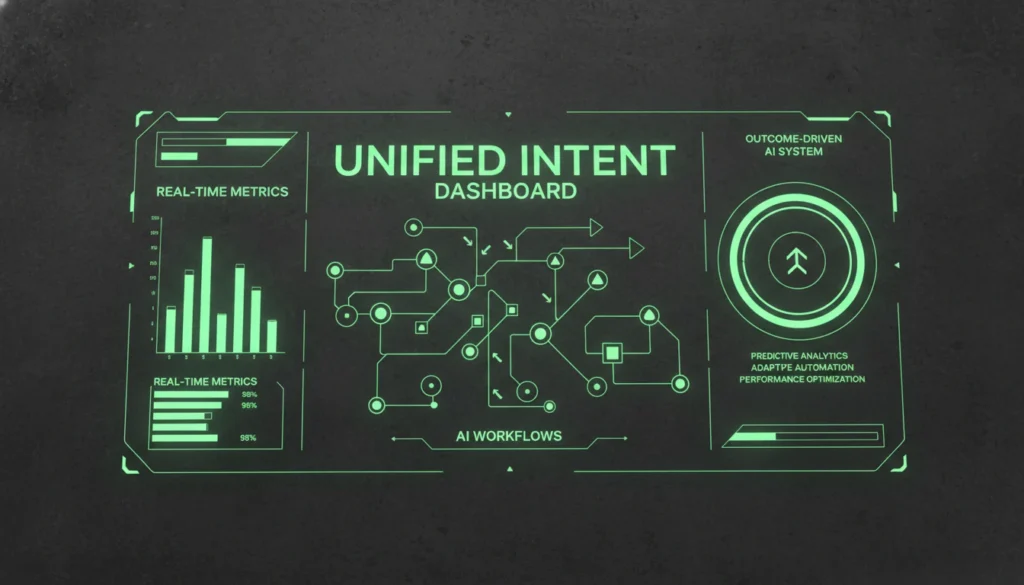
Intent-based AI delivers consistency at scale. When intent is defined centrally, AI systems produce predictable outcomes across teams, regions, and use cases. This reduces operational variance and improves trust.
It also lowers the barrier to adoption. Business users no longer need to master prompt syntax. They interact with AI using natural goals and contextual inputs, accelerating enterprise-wide usage.
From a governance perspective, intent-based systems are easier to control. Enterprises can define acceptable boundaries, risk thresholds, and ethical constraints directly within the intent framework.
How Intent-Based AI Changes Enterprise Roles
The decline of prompt engineering does not eliminate human oversight. Instead, roles evolve. AI strategists focus on defining intent, constraints, and success metrics. Governance teams ensure alignment with compliance and ethics.
Technical teams shift from writing prompts to designing intelligent workflows and feedback loops. This transition creates more durable enterprise capabilities compared to prompt-centric experimentation.
Preparing for an Intent-Driven AI Future
Enterprises preparing for 2026 must rethink AI architecture, operating models, and talent strategy. Success will depend on clearly defined business objectives, strong data foundations, and governance frameworks that support autonomous decision-making.
Intent-based AI is not about reducing control. It is about elevating control to the level where it belongs: strategy, outcomes, and trust.
Conclusion: Beyond Prompts, Toward Purpose
The end of prompt engineering signals AI maturity, not limitation. In 2026, intent-based AI will define how enterprises scale intelligence responsibly and effectively.
Organizations that move early will gain speed, consistency, and strategic advantage. Learn how DB Soft Tech helps enterprises transition from experimental AI to intent-driven systems on our About Us page.
Ready to design AI systems that understand intent, not just instructions? Contact DB Soft Tech to build future-ready, enterprise-grade AI solutions.