
Why Critical Cybersecurity Risks in 2026 Matter
Critical cybersecurity risks in 2026 will redefine how enterprises protect data, infrastructure, and digital operations in an increasingly hostile cyber environment.
Threat actors are no longer relying on basic exploits. They are using automation, artificial intelligence, and advanced social engineering techniques to compromise systems at scale. Cybersecurity is now a business survival issue, not just a technical concern.
1. AI-Driven Cyber Attacks
One of the most dangerous cybersecurity risks in 2026 is the rise of AI-powered cybercrime. Attackers use machine learning to automate phishing, generate deepfake identities, and bypass traditional detection systems.
These attacks adapt in real time, making static security tools ineffective. Enterprises must deploy intelligent, adaptive security systems to counter intelligent threats.
2. Identity and Access Exploitation
Digital identity is becoming the primary attack vector. Compromised credentials, session hijacking, and identity spoofing are replacing network-level breaches.
As enterprises move to cloud and zero-trust architectures, identity becomes the new security perimeter. Weak identity governance creates systemic vulnerability.

3. Cloud Infrastructure Misconfigurations
Cloud adoption continues to accelerate, but misconfigured environments remain one of the largest enterprise security gaps. Improper access controls, exposed APIs, and insecure storage systems create easy entry points for attackers.
These risks increase as organizations operate across hybrid and multi-cloud environments with fragmented governance.
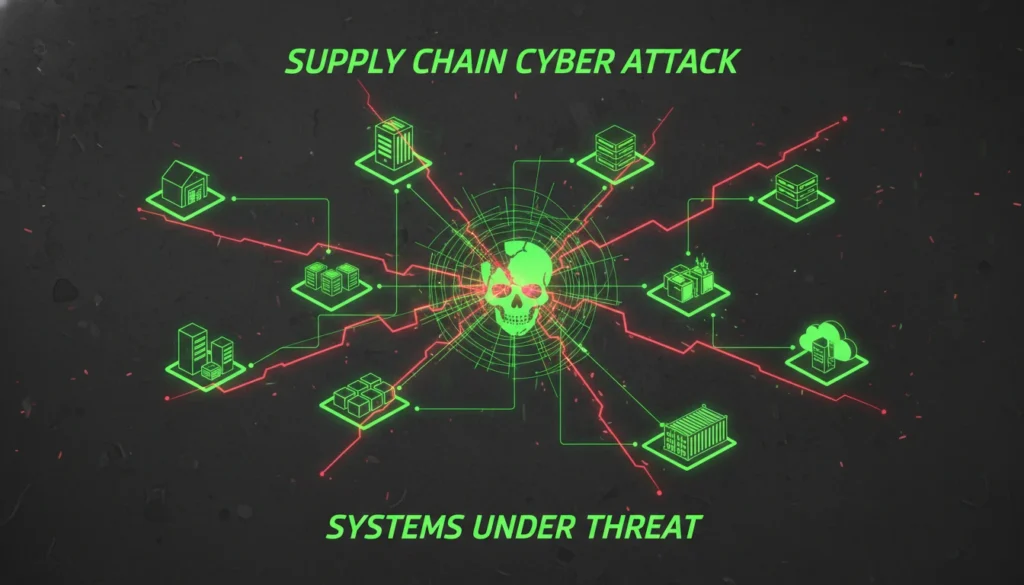
4. Supply Chain Cyber Attacks
Enterprises are increasingly targeted through third-party vendors, software dependencies, and service providers. A single compromised supplier can expose thousands of organizations.
Supply chain attacks are difficult to detect and can spread silently across interconnected systems, making them one of the most dangerous cybersecurity risks in 2026.
5. Data Privacy and Regulatory Violations
Data protection regulations are becoming stricter worldwide. Enterprises must demonstrate how data is stored, processed, and protected.
Security failures now carry legal, financial, and reputational consequences. Non-compliance is no longer a minor risk — it is an existential threat to enterprise operations.
6. Ransomware and Cyber Extortion
Ransomware has evolved into multi-layered cyber extortion. Attackers encrypt data, leak sensitive information, and disrupt operations simultaneously.
This shift transforms ransomware from an IT incident into a full-scale business crisis impacting customers, partners, and regulators.
Why Cybersecurity Is Now a Board-Level Issue
The critical cybersecurity risks in 2026 directly affect revenue, brand trust, regulatory compliance, and enterprise valuation. Cybersecurity is no longer owned by IT departments alone.
Boards and executives are increasingly accountable for cyber resilience, risk governance, and digital protection strategies.
Why Cyber Risk Is Now a Business Risk
Cyber incidents now impact revenue, regulatory compliance, customer trust, and brand reputation. As enterprises depend more on digital systems, cybersecurity failures translate directly into business failures.
Managing the critical cybersecurity risks in 2026 therefore requires executive ownership, strategic governance, and continuous investment in resilience, not just technical controls.
Conclusion: Cyber Resilience Over Cyber Defence
The critical cybersecurity risks in 2026 show that prevention alone is no longer sufficient. Enterprises must build resilience, not just defences.
This means investing in intelligent security systems, governance frameworks, workforce training, and rapid recovery capabilities.
Guidance from the Cybersecurity and Infrastructure Security Agency highlights the importance of resilience-based cybersecurity strategies for modern enterprises.
Learn how DB Soft Tech helps enterprises build secure digital ecosystems on our About Us page.
Ready to future-proof your enterprise security strategy? Contact DB Soft Tech to build resilient, intelligent cybersecurity systems for 2026 and beyond.