
Business Automation Architecture is no longer an operational enhancement—it is a strategic enterprise foundation. Modern organizations require automation systems that are structurally integrated into business models, governance frameworks, and digital infrastructure. Automation today defines scalability, resilience, and long-term competitiveness.
Enterprises that treat automation as isolated tooling fail to achieve transformation. True automation architecture redesigns workflows, data flows, and decision systems to create intelligent, self-optimizing organizations. For CXOs and founders, automation is now an enterprise operating model, not a technical project.
Business Automation Architecture as Enterprise Infrastructure
A structured Business Automation Architecture aligns processes, data, AI systems, and governance into a unified enterprise framework. Automation becomes embedded into core operations rather than layered on top of them.
This architectural approach ensures that automation supports strategic goals such as scalability, operational efficiency, risk control, and revenue acceleration. Without architecture-level design, automation increases fragmentation and operational complexity.

7 Scalable Gains from Enterprise Automation Architecture
- Operational Scalability: Automated systems allow enterprises to grow output without linear growth in resources or cost structures.
- Process Standardization: Architecture-driven automation enforces consistency, compliance, and quality across business operations.
- Decision Acceleration: Real-time data automation enables faster, more accurate enterprise decision-making.
- Cost Efficiency: Intelligent workflows reduce waste, redundancy, and manual overhead across departments.
- Risk Reduction: Automated controls improve compliance, auditability, and enterprise risk management.
- Business Agility: Modular automation frameworks allow enterprises to adapt rapidly to market changes.
- Competitive Advantage: Enterprises with automation architecture outperform competitors in speed, scale, and efficiency.
Strategic Design Principles
Effective Business Automation Architecture begins with business process intelligence. Enterprises must map value streams, identify automation leverage points, and define transformation priorities based on business impact.
Architecture design must integrate data infrastructure, AI systems, automation platforms, and enterprise applications into a single operational model. Fragmented systems create automation silos that limit enterprise value.
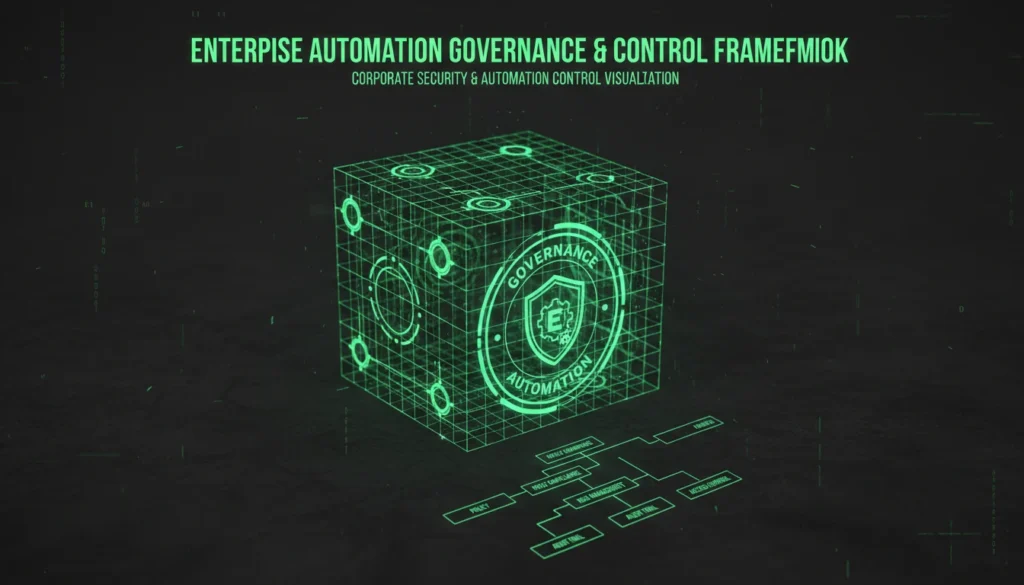
Governance, Security, and Control Layers
Enterprise automation must be governed. Security frameworks, compliance controls, data governance, and AI oversight mechanisms must be embedded into the automation architecture itself.
Without governance, automation introduces operational and regulatory risks. With governance, automation becomes a controlled, scalable, and trusted enterprise capability.
Enterprise Transformation Enablement
Business automation success depends on organizational alignment. Leadership, operations, IT, and strategy teams must operate under a unified transformation vision.
Enterprises that adopt structured digital transformation frameworks achieve faster automation maturity and lower implementation risk. Strategic digital partners play a critical role in enterprise automation execution and scalability.
Learn more about structured enterprise transformation and digital strategy at https://dbsofttech.com/about-us/
Global enterprise research confirms the value of automation-led transformation. According to McKinsey’s enterprise automation insights, automation-driven organizations achieve sustained productivity and strategic advantage. https://www.mckinsey.com/capabilities/operations/our-insights
Future-Ready Enterprise Architecture
Business Automation Architecture is not a technology initiative—it is a business survival strategy. Enterprises that delay architectural automation face structural inefficiencies, slower growth, and declining competitiveness.
Organizations that invest in intelligent automation architecture today build future-ready enterprises capable of sustained growth, adaptive operations, and long-term market leadership.