AI accelerating modern warfare through automated intelligence analysis

AI Accelerating Modern Warfare: 5 Critical Shifts

AI accelerating modern warfare is transforming how military operations identify threats, analyze intelligence, and execute missions. Historically, target identification and operational planning required large teams of analysts reviewing satellite images, intelligence reports, and reconnaissance data. Artificial intelligence now processes these data streams within seconds, dramatically reducing the time required to make strategic decisions. This capability […]

Read More
Confidential computing protecting AI data processing

Confidential Computing

Confidential computing is emerging as a critical technology for protecting sensitive data during artificial intelligence processing. Traditional security systems protect data when it is stored or transmitted, but information often becomes vulnerable when it is actively processed by applications. Confidential computing addresses this gap by ensuring that data remains encrypted even while being used for […]

Read More
Private intelligence in modern warfare powered by AI

Private Intelligence in Modern Warfare

Private intelligence in modern warfare is emerging as a powerful force reshaping how nations collect, analyze, and act on strategic information. Historically, intelligence gathering was dominated by government agencies and military organizations. Today, advanced artificial intelligence systems developed by private technology companies are rapidly expanding the intelligence capabilities available outside traditional defense institutions. The rise […]

Read More
BadeSaba hack cybersecurity breach visualization

BadeSaba Hack: 5 Critical Cybersecurity Lessons

The BadeSaba hack has emerged as a striking example of how modern cyber attacks are evolving in complexity and scale. As organizations become increasingly dependent on digital infrastructure, attackers are leveraging automation, artificial intelligence, and sophisticated reconnaissance techniques to penetrate systems that were once considered secure. Incidents such as the BadeSaba hack illustrate how cyber […]

Read More
Digital fog of war caused by AI hallucinations

Digital Fog of War: 5 AI Hallucination Risks

Digital fog of war describes a modern form of battlefield uncertainty created by artificial intelligence systems, automated analytics, and large-scale digital information flows. In traditional military theory, the “fog of war” refers to the confusion and uncertainty experienced during conflict due to incomplete or unreliable information. The concept dates back to the military strategist Carl […]

Read More
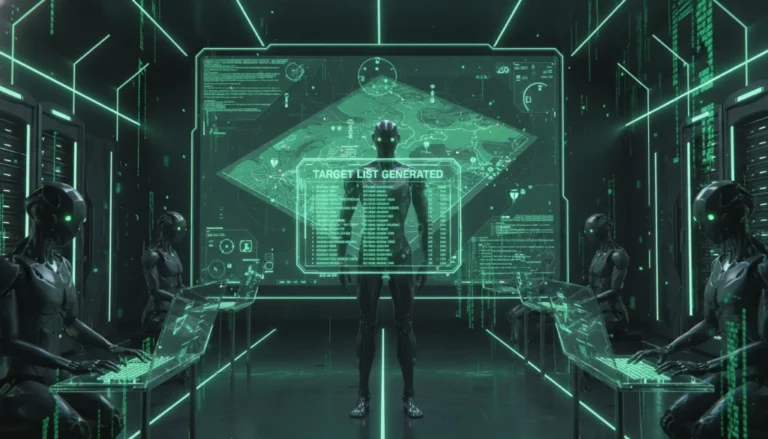
Algorithmic warfare powered by AI military systems

Algorithmic Warfare: 5 Critical Military Shifts

Algorithmic warfare represents a new phase in modern military strategy where artificial intelligence, data analytics, and autonomous systems influence battlefield decisions. Military operations have traditionally relied on human planning and command structures. Today, algorithms are becoming central to surveillance, targeting, logistics, and cyber defense. As nations compete for technological superiority, algorithmic warfare is transforming how […]

Read More
AI-enabled cyber warfare systems and digital battlefield

AI-Enabled Cyber Warfare: 5 Critical 2026 Threats

AI-enabled cyber warfare is rapidly transforming how nations conduct digital conflict and protect critical infrastructure. Traditional cyber attacks relied heavily on human operators to identify vulnerabilities, plan attacks, and deploy malware. Artificial intelligence now enables automated threat detection, adaptive malware, and autonomous cyber defense systems capable of operating at machine speed. Governments and defense organizations […]

Read More
Critical cybersecurity risks in 2026 facing enterprises

6 Critical Cybersecurity Risks in 2026

Why Critical Cybersecurity Risks in 2026 Matter Critical cybersecurity risks in 2026 will redefine how enterprises protect data, infrastructure, and digital operations in an increasingly hostile cyber environment. Threat actors are no longer relying on basic exploits. They are using automation, artificial intelligence, and advanced social engineering techniques to compromise systems at scale. Cybersecurity is […]

Read More