5 Powerful Enterprise AI Governance Frameworks
Enterprise AI governance frameworks are becoming essential as organizations scale artificial intelligence across business operations, customer platforms, and decision systems. Without governance, AI creates operational risk, compliance exposure, and ethical uncertainty. Enterprises must move beyond experimentation and adopt structured governance models that ensure control, trust, and accountability.
As AI systems influence financial decisions, healthcare outcomes, security operations, and customer experiences, governance is no longer optional. It is a strategic requirement for sustainable AI adoption.
1. Centralized AI Governance Framework
The centralized model places AI ownership within a dedicated governance body or Center of Excellence. This group defines policies, ethical standards, compliance controls, and model approval processes.
This enterprise AI governance framework ensures consistency, regulatory alignment, and risk management across departments, making it ideal for highly regulated industries such as finance, healthcare, and government.
2. Federated Governance Framework
Federated governance balances control and agility. Core governance policies are centralized, while AI execution is distributed across business units.
This model allows innovation at scale while maintaining oversight, making it one of the most scalable enterprise AI governance frameworks for large organizations.

3. Ethics-Driven AI Governance Framework
This framework prioritizes fairness, transparency, and accountability. Ethical guidelines are embedded into AI development, training, and deployment processes.
Enterprises using this model ensure AI systems align with social responsibility, regulatory expectations, and public trust.
4. Compliance-First Governance Framework
In this model, governance is built around regulatory requirements, auditability, and documentation. AI systems are designed with traceability, explainability, and reporting as core features.
This enterprise AI governance framework is essential for industries facing strict regulatory oversight and legal accountability.
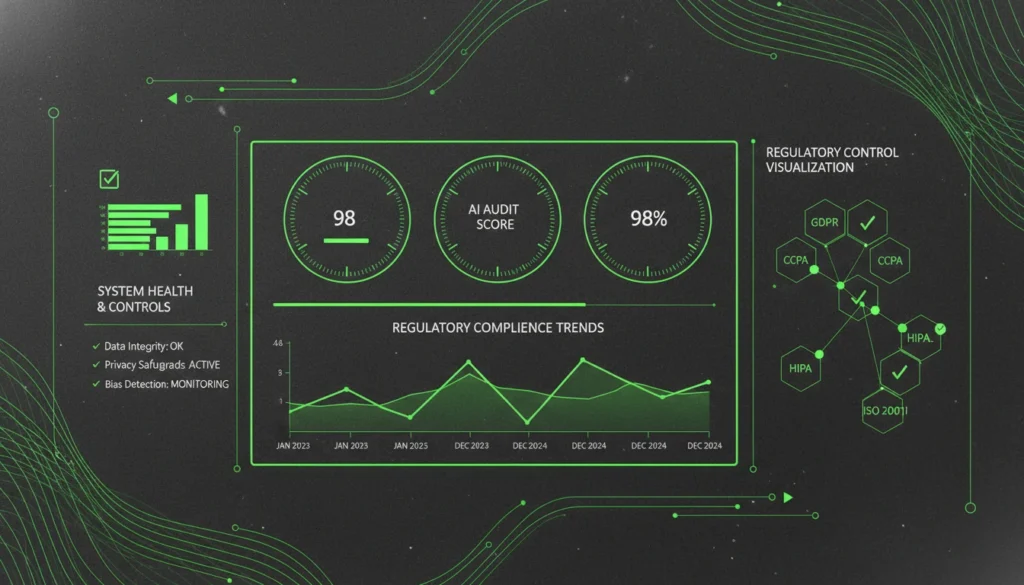
5. Hybrid Enterprise Governance Framework
Most enterprises adopt hybrid governance models that combine centralized oversight, federated execution, ethical principles, and compliance controls.
This approach provides flexibility while maintaining enterprise-wide standards, making it the most resilient long-term governance strategy.
Why Governance Determines AI Success
AI initiatives often fail not because of technology, but because of weak governance. Without structure, AI creates fragmented systems, unmanaged risk, and operational chaos.
Enterprise AI governance frameworks provide clarity, ownership, and accountability, ensuring AI supports business objectives rather than undermining them.
Governance as a Competitive Advantage
Strong governance enables faster innovation by reducing uncertainty. When enterprises trust their AI systems, they scale adoption more confidently.
Governance transforms AI from a technical experiment into a strategic enterprise capability.
Why Governance Maturity Defines AI Success
AI governance maturity determines whether artificial intelligence becomes a strategic asset or an operational risk. Enterprises with immature governance struggle with fragmented AI systems, unclear accountability, and inconsistent decision-making. These weaknesses create security gaps, regulatory exposure, and reputational risk.
Mature governance structures enable organizations to align AI systems with business strategy, legal frameworks, and ethical standards. This alignment ensures that AI supports long-term growth instead of creating unmanaged complexity across digital ecosystems.
Strong governance maturity also improves stakeholder confidence, including customers, partners, regulators, and investors, reinforcing trust in enterprise AI adoption.
This governance maturity also enables long-term digital stability by reducing operational risk, strengthening compliance readiness, and supporting enterprise-scale innovation across evolving digital ecosystems.
It also improves organizational trust, internal alignment, and strategic clarity for leadership teams.
Conclusion: Governance Is the Foundation of Enterprise AI
Enterprise AI governance frameworks define how safely, responsibly, and effectively organizations scale artificial intelligence. Without governance, AI becomes a liability. With governance, it becomes a competitive advantage.
According to World Economic Forum, responsible AI governance is essential for sustainable digital transformation.
Learn how DB Soft Tech designs enterprise-grade AI systems with built-in governance on our About Us page.
Ready to implement secure and scalable AI governance? Contact DB Soft Tech to build responsible, enterprise-ready AI systems.