Vibe coding and intent-driven dev represent a new paradigm in software development where artificial intelligence interprets developer intent rather than relying solely on manual code writing. Traditional programming requires developers to translate ideas into detailed syntax and structured logic. Modern AI-powered development tools increasingly understand natural language instructions and convert them into functional code.
This shift is redefining productivity, enabling developers to focus more on architecture, product design, and problem-solving while AI handles repetitive implementation tasks. As AI models improve, intent-driven development may become a standard workflow for software engineering teams.
The Evolution of Developer Tools
Software development has evolved from manual coding in low-level languages to modern frameworks, automation pipelines, and cloud-native architectures. Each stage reduced friction and accelerated productivity.
Vibe coding and intent-driven dev represent the next step in this evolution. Instead of manually implementing every function, developers communicate their goals and allow intelligent tools to generate and optimize the required code.
1. Natural Language Programming Interfaces
AI-powered development environments allow developers to describe functionality using natural language. The system interprets the request and generates structured code, APIs, and database queries.
This approach lowers the barrier to building software and accelerates prototyping cycles.

2. Faster Prototyping and Product Iteration
Traditional development cycles involve writing code, debugging errors, and refining implementation over multiple iterations. Intent-driven development compresses these steps by generating working components immediately.
Teams can rapidly test ideas and build proof-of-concept systems without spending weeks on boilerplate code.
3. Developer Productivity and Focus
Many development tasks involve repetitive patterns such as API integration, form validation, data mapping, and configuration setup. AI tools automate these tasks, allowing developers to focus on complex system architecture and product innovation.
Vibe coding and intent-driven dev improve productivity by reducing cognitive load and development friction.
4. Collaboration Between Humans and AI
Intent-driven development does not replace developers. Instead, it introduces collaborative workflows where AI assists with code generation, documentation, debugging, and optimization.
Developers remain responsible for system design, security, and quality assurance while AI accelerates implementation.
5. Intelligent Debugging and Code Optimization
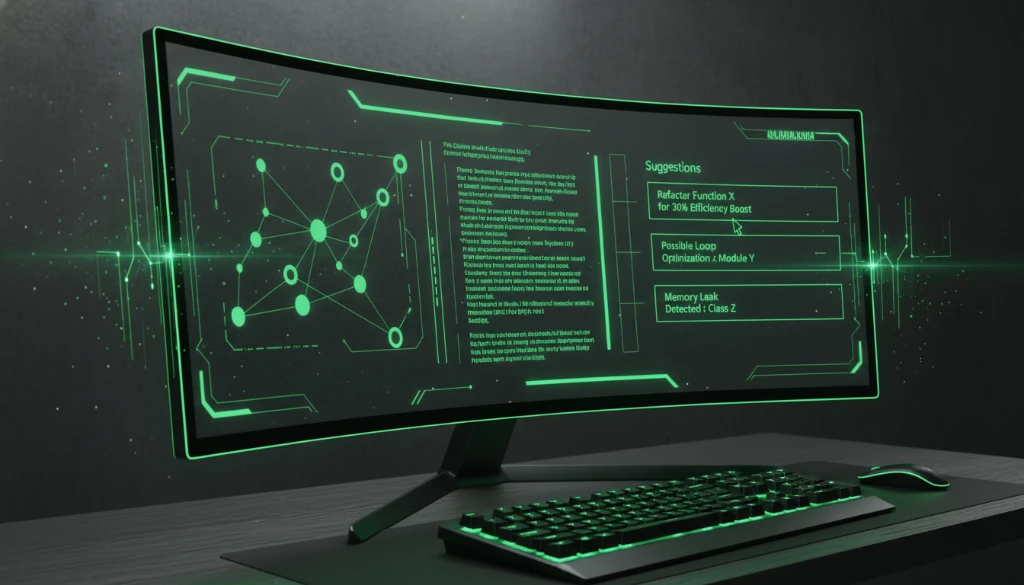
AI development platforms can analyze code patterns, detect inefficiencies, and recommend improvements. This capability reduces debugging time and improves application performance.
Intent-driven development tools continuously learn from developer feedback and project history to improve recommendations.
Challenges of Intent-Driven Development
Despite its advantages, this development model introduces challenges related to code transparency, dependency on AI tools, and security validation. Generated code must still be reviewed carefully to ensure reliability and maintainability.
Organizations must establish governance frameworks to ensure AI-generated code meets quality standards.
The Future of Software Engineering
As AI models become more capable, intent-driven development may transform how software teams operate. Development environments will increasingly behave like intelligent collaborators that interpret high-level goals and translate them into working systems.
Vibe coding and intent-driven dev will likely integrate with cloud platforms, automation pipelines, and enterprise architecture tools to support large-scale development.
Conclusion: Coding as Strategic Design
Vibe coding and intent-driven dev signal a shift from manual programming toward strategic software design. Developers will focus more on defining objectives and less on implementing repetitive syntax.
Industry insights from software engineering research highlight the growing role of AI in developer productivity.
Learn how DB Soft Tech builds intelligent development platforms on our About Us page.
Ready to accelerate your development workflows with AI? Contact DB Soft Tech to design scalable AI-powered engineering systems.